
Understanding the Navagraha
Navagraha refers to nine influences recognised in Vedic astrology: the Sun, Moon, Mars, Mercury, Jupiter, Venus, Saturn, Rahu and Ketu. Within this tradition, they represent different aspects of character, experience and spiritual development.
References to these influences may appear in Nadi readings and devotional practices associated with Tamil temple traditions.
These associations form a symbolic framework for discussing different dimensions of life. A reference to a graha may concern the theme of a passage, the qualities it describes or a devotional practice. Understanding that context is more helpful than treating a single planetary name as a complete explanation. The Navagraha tradition brings these different themes together, giving readers a vocabulary for discussing experience within the wider language of Indian astrology.
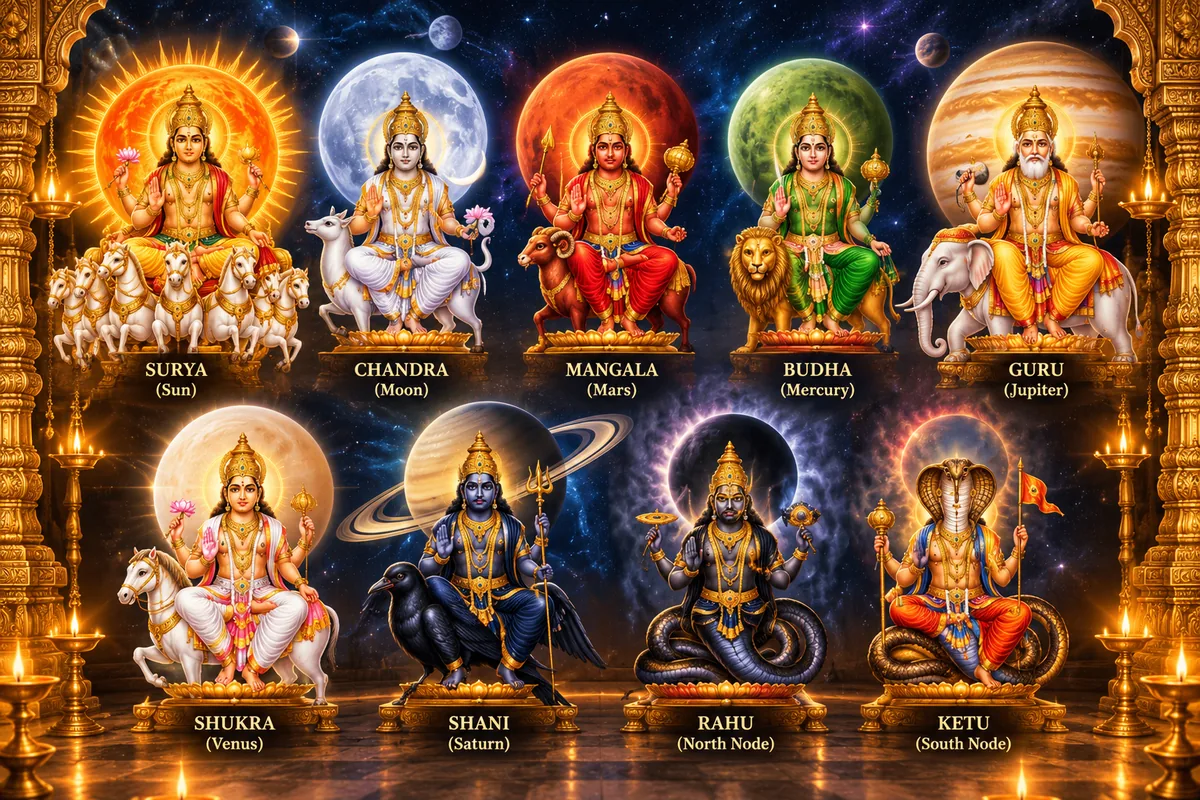
The Nine Influences and Their Meanings
Surya represents vitality and leadership; Chandra, the mind and emotions; and Angaraka, courage and determination. Budha relates to learning and communication, Guru to wisdom, and Shukra to relationships and beauty. Shani symbolises discipline and perseverance, Rahu ambition and change, and Ketu detachment and spiritual reflection.
The nine influences are considered in relation to one another rather than as isolated labels. Confidence, emotion, learning, responsibility and spiritual reflection can all be relevant within one discussion. Their traditional names provide a way to explore these connections. When a reading uses several planetary references, asking how they relate to the chapter helps you follow the explanation and understand why particular qualities have been emphasised.
Planetary References in a Reading
A manuscript may discuss planetary influences when interpreting life circumstances or describing a devotional practice. Understanding the passage in context helps the seeker follow its meaning. The reader can explain unfamiliar names and the traditional purpose of the guidance.
It is helpful to distinguish the words in the manuscript from the explanation offered during the consultation. Ask the reader to describe the passage in straightforward language and identify the subject being discussed. If a devotional suggestion appears, understanding its purpose and connection to the verse gives the practice context. This approach allows you to follow the reading carefully and consider its meaning at a pace that suits you.
Temple Worship and Reflection
Navagraha worship is part of a living pilgrimage tradition. Devotees approach these shrines for prayer, reflection and spiritual balance. A temple journey can accompany a consultation, offering time to engage with local customs and the sacred landscape of Tamil Nadu.
A pilgrimage can be approached as time set aside for devotion and an encounter with a living temple tradition. The experience includes the surroundings, local forms of worship and the opportunity for quiet reflection. Giving each visit enough time makes the journey more comfortable and meaningful. When arranging worship alongside a reading, clarity about the purpose of each activity helps you plan a visit that respects both the tradition and your needs.
Discuss your reading with us.
Contact the desk to confirm the available manuscript, consultation language and fees.
Enquire About a Consultation